Bull riding looks simple at first glance. A rider climbs on, holds tight, and tries to last eight seconds. That’s the surface. But once you understand bull riding scoring explained, the sport transforms completely. Suddenly, every movement matters. Every kick, every shift in balance, every explosive twist from the bull it all counts. I’ve watched rides that looked impressive fall flat on the scoreboard. I’ve also seen subtle, controlled performances earn massive scores. That’s the difference. Scoring isn’t random. It’s structured, precise, and surprisingly strategic. When you know what judges are looking for, you stop guessing. You start seeing. Let’s break it down so you can watch the next rodeo like an insider.
What Is Bull Riding Scoring?
At its core, bull riding scoring is a system used to evaluate both the rider and the bull during a ride. It’s not just about survival. It’s about performance on both sides. The total score is based on a 100-point system. Half of that belongs to the rider. The other half belongs to the bull. That balance is what makes the sport unique.
- Rider performance: up to 50 points
- Bull performance: up to 50 points
- Combined total: up to 100 points
You’re not just watching a person hang on. You’re watching a two-part performance unfold in real time. And when both sides deliver? That’s when the magic happens.
The 100-Point System Breakdown
Let’s simplify it.
| Component | Max Points | What’s Being Judged |
| Rider | 50 | Control, style, technique |
| Bull | 50 | Power, movement, difficulty |
| Total Score | 100 | Combined performance |
Most winning rides land in the 85–90+ range. Anything above 90? That’s elite territory. It usually means both rider and bull delivered something special. Perfect scores are almost nonexistent. Why? Because both rider and bull would need to perform flawlessly at the same time. That level of synchronization is rare even at the highest levels of competition. In major rodeos, multiple judges score each ride. Their scores are combined to create the final number. This system helps balance subjectivity and ensures fairness across the board.
How Judges Score the Rider
This is where things get technical but also fascinating. Judges are looking for control, not chaos. Style, not survival. Anyone can hang on for a few seconds. Not everyone can make it look smooth.
Key Rider Scoring Factors:
- Balance and control
- Body positioning
- Consistency of movement
- Use of the free arm
- Timing with the bull’s motion
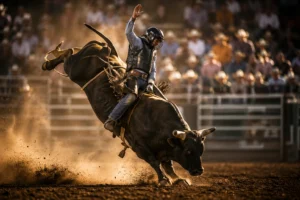
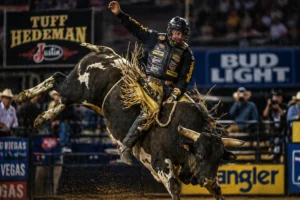
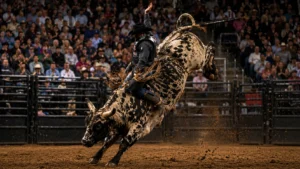
A high-scoring rider doesn’t fight the bull. They move with it. Picture this. The bull launches out of the chute, kicks high, spins hard. A skilled rider stays centered, hips loose, shoulders aligned. Their movements are sharp but controlled. It almost looks choreographed. That’s what judges reward.
What Lowers a Rider’s Score?
- Sloppy posture
- Overcorrection with the free arm
- Losing rhythm mid-ride
- Leaning too far forward or back
Even if the rider completes the ride, these flaws can drag the score down. That’s why fundamentals matter. Many riders refine these basics early through guides like How to bull ride, building habits that carry into competition.
How Judges Score the Bull
Now here’s the part many new fans overlook. The bull isn’t just part of the ride it’s half the score. A powerful, unpredictable bull creates opportunity.
Key Bull Scoring Factors:
- Explosiveness
- Speed
- Strength
- Spin and direction changes
- Unpredictability
A bull that moves in a straight, predictable line won’t score high. Judges want action. They want intensity. They want a challenge. The more difficult the bull is to ride, the higher its score potential. And here’s the key insight: a great bull can elevate an average ride. But a weak bull can limit even the best rider.
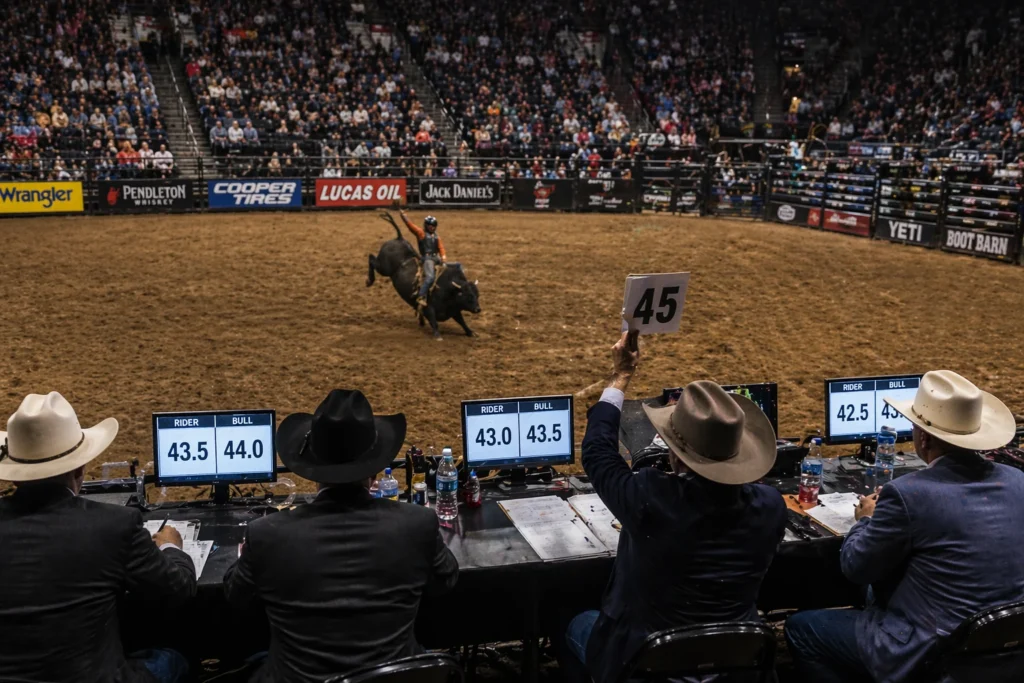
The Role of Judges in Bull Riding
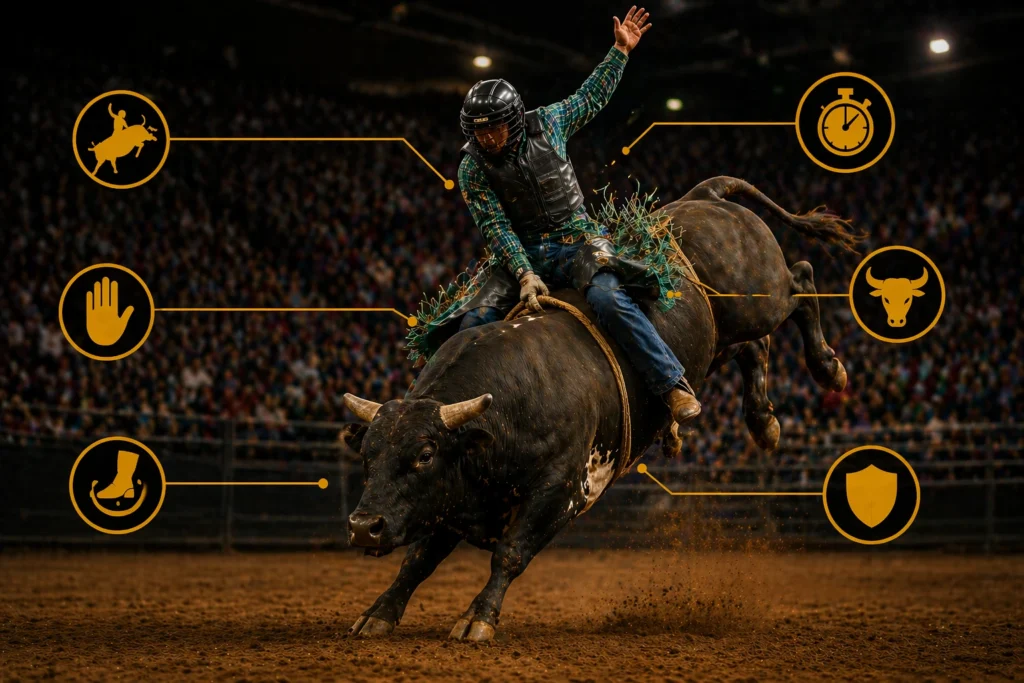
Bull riding isn’t judged casually. It’s a structured process. Typically, two to four judges are positioned around the arena. Each judge scores both the rider and the bull independently. Their scores are then combined. This multi-angle approach ensures accuracy. It also reduces bias, which is critical in a sport where split-second decisions matter. Professional rodeos often follow standards set by organizations like the Professional Rodeo Cowboys Association. This keeps scoring consistent from one event to another.
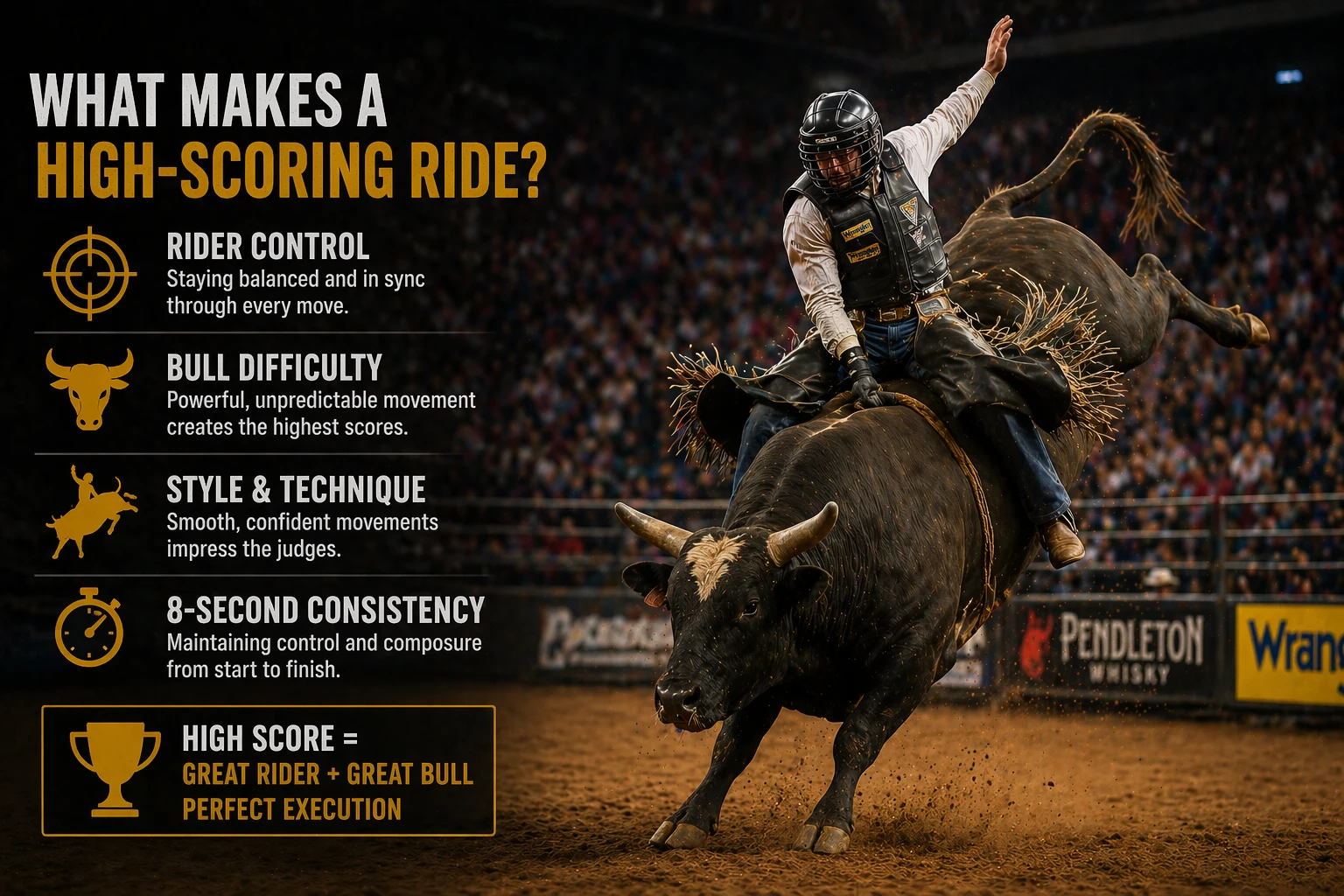
What Makes a High-Scoring Ride?
This is where everything comes together. A high score isn’t about luck. It’s about execution.
Traits of a High-Scoring Ride:
- Strong synchronization with the bull
- Confident, controlled posture
- Fluid movement throughout the ride
- Aggressive but balanced style
Think of it like controlled chaos. The bull is unpredictable. The rider is not.
A 90+ point ride usually features:
- A bull delivering explosive, dynamic movement
- A rider matching every motion without hesitation
When both elements align, the result is electric. You can feel it instantly in the crowd, in the arena, in the judges’ reactions.
Common Scoring Terms Explained
To fully grasp bull riding scoring explained, you need to understand the language.
Key Terms:
- Qualified Ride – A full 8-second ride that earns a score
- Mark-Out Rule – Rider must have heels above the bull’s shoulders at the start
- Free Hand Rule – Free hand cannot touch the bull or equipment
- Spurring Motion – Controlled leg movement showing technique
- Re-Ride – A second chance under certain conditions
These aren’t minor details. They directly affect whether a ride counts and how it’s scored.
The 8-Second Rule and Its Impact on Scoring
Eight seconds. That’s the goal. No eight seconds? No score. But there’s more to it. The clock doesn’t just define success. It shapes the rider’s entire approach. Every second must be controlled. Every movement deliberate. Those eight second’s stretches. They test endurance, focus, and composure. And if the rider makes it? Only then does scoring begin.
Penalties and Disqualifications
Mistakes can be costly. Even a strong ride can be wiped out by a single violation.
Common Penalties:
- Touching the bull with the free hand
- Failing the mark-out rule
- Losing equipment in a way that affects the ride
If a major rule is broken, the ride is disqualified. Zero points. That’s why discipline is critical. It’s not just about staying on it’s about doing everything right while staying on.
Re-Rides: When and Why, They Happen
Sometimes the situation isn’t fair to the rider. That’s where re-rides come in.
Possible Re-Ride Scenarios:
- Bull doesn’t perform as expected
- External interference affects the ride
- Equipment issues outside the rider’s control
The rider can choose to accept the score or take a re-ride. This decision matters. It’s a calculated risk. Accepting a low score guarantees points. Taking a re-ride could lead to something better or nothing at all.
Amateur vs Professional Scoring
Not all rodeos are equal. At the amateur level, scoring can vary more. Judges may have less experience. Standards may differ. At the professional level, everything tightens.
Key Differences:
- More consistent judging
- Higher expectations for performance
- Greater emphasis on detail
This is where small mistakes cost big points and small improvements make a big difference.
How Bull Riding Scoring Has Evolved
Scoring hasn’t always been this refined. In earlier days, judging was more subjective. Less structured. Today, it’s far more consistent. More transparent. More data-driven. Technology has helped. So has increased visibility through televised events. The sport continues to evolve much like complex systems studied under concepts like Emergence, where small interactions combine to create larger patterns. Bull riding scoring works in a similar way. Individual movements build into a final result.
Advanced Insight: Reading the Ride in Real Time
If you want to go beyond basics, start analyzing rides as they happen. Watch the rider’s hips. They should stay loose and centered. Track the bull’s direction. Sudden changes increase difficulty and scoring potential. Look at timing. A rider who anticipates movement scores higher than one who reacts late. This level of awareness separates casual fans from informed ones.
Tips for Fans: How to Judge a Ride Yourself
You don’t need to be a judge to understand scoring. Start with these simple checkpoints:
- Is the rider balanced and centered?
- Are movements smooth or erratic?
- Is the bull powerful and unpredictable?
- Does the rider stay in rhythm the entire time?
Quick Fan Scoring Guide:
| Observation | Likely Score Impact |
| Smooth, controlled riding | Higher score |
| Strong, aggressive bull | Higher score |
| Rider off-balance | Lower score |
| Weak bull performance | Lower score |
Practice this a few times, and your instincts will sharpen fast.
Why Bull Riding Scoring Matters
Scoring defines the sport. It determines winners. Rankings. Earnings. Nit also creates structure. Without it, bull riding would feel unpredictable in the wrong way. With it, every ride tells a story. And once you truly understand bull riding scoring explained, you start seeing patterns. You anticipate scores. You understand outcomes. That’s when the sport becomes even more exciting.
Final Thoughts
Bull riding is raw. Intense. Unpredictable. But the scoring system brings order to that chaos. It rewards precision. Control. Timing. Confidence. And now, you’re in on it. Next time you watch a rodeo, don’t just wait for the buzzer. Watch closely. Break it down. Analyze every movement. Because once you fully grasp bull riding scoring explained, every ride feels different. Sharper. Smarter. More exciting. And that’s where the real appreciation begins.
FAQs
How is bull riding scoring calculated?
Scores are based on a 100-point system, split evenly between the rider (50 points) and the bull (50 points).
What is considered a good bull riding score?
A score above 85 is strong, while anything over 90 is considered elite.
Why does the bull get scored too?
The bull’s performance determines difficulty, which directly impacts the overall score.
What happens if a rider doesn’t last 8 seconds?
If the rider fails to reach 8 seconds, the ride does not qualify and receives no score.
Can a rider get a high score on an easy bull?
It’s possible, but unlikely less challenging bulls usually result in lower overall scores.
What is the free hand rule in bull riding?
The rider’s free hand cannot touch the bull or themselves during the ride, or they’ll be disqualified.
What is a re-ride in bull riding?
A re-ride is a second chance offered when the bull doesn’t perform properly or outside factors affect the ride.
How many judges score a bull riding event?
Most events use two to four judges who independently score both the rider and the bull.
What lowers a rider’s score the most?
Poor balance, bad posture, and losing rhythm with the bull can significantly reduce a score.
Why is understanding bull riding scoring important?
Knowing bull riding scoring explained helps fans better appreciate the skill, difficulty, and results of each ride.