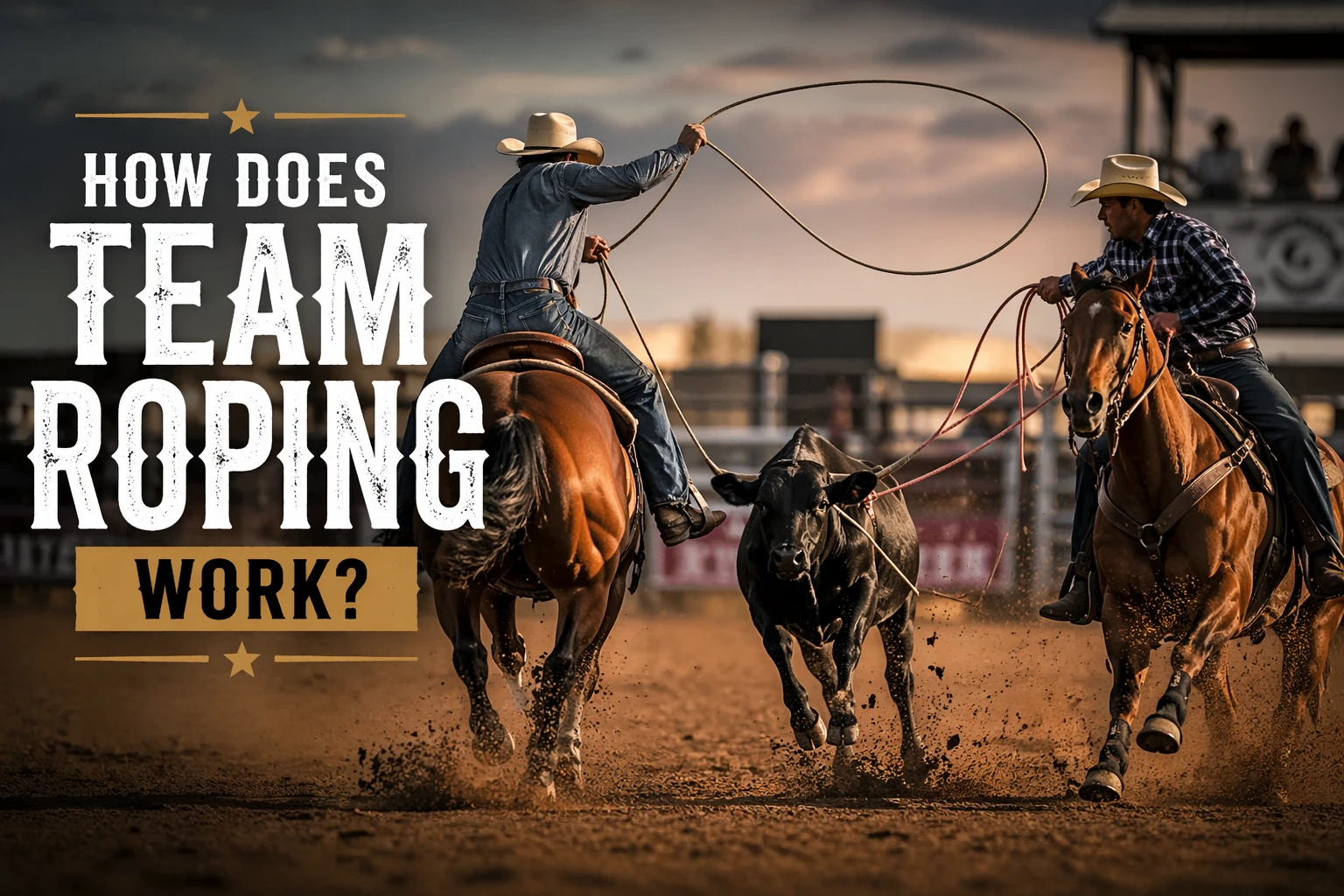
Team roping looks fast. It feels intense. And if you’re new to it, you might be wondering how does team roping work exactly? You’re not alone. This is one of the few rodeo events where success depends on two riders thinking and moving like one. Blink, and it’s over. Miss your timing, and the run falls apart. But once you understand the structure, the roles, and the rhythm of a run, everything clicks. The chaos starts to feel controlled. The speed begins to make sense. And suddenly, you’re not just watching you’re understanding. Let’s break it down step by step fclearly, practically, and without fluff.
What Is Team Roping?
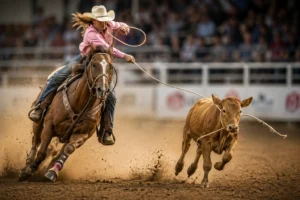
At its core, team roping is a timed rodeo event where two riders work together to rope a steer—one targeting the head, the other the hind legs. Simple concept. Hard execution.
Here’s the goal:
- Secure the steer as fast as possible
- Complete both catches legally
- Stop the clock with control and precision
There are two competitors:
- Header – ropes the head
- Heeler – ropes the back legs
If both do their jobs cleanly, the clock stops. Fastest time wins. That’s the short version of how does team roping work. Now let’s go deeper and understand what really makes it tick.
Where Team Roping Comes From
Team roping wasn’t created for entertainment. It started as a necessity. On working ranches, cowboys needed an efficient way to handle cattle. One rider would rope the head to control the animal’s direction. Another would secure the hind legs to prevent kicking and movement. It was practical, direct, and effective. Over time, this real-world skill turned into competition. Rodeos adopted the format. Rules were introduced. Techniques evolved. Horses were trained specifically for this purpose, becoming sharper, faster, and more responsive. Today, team roping stands as a direct link to authentic ranch life especially in Texas, where rodeo culture runs deep and traditions are still respected.
The Two Roles: Header and Heeler
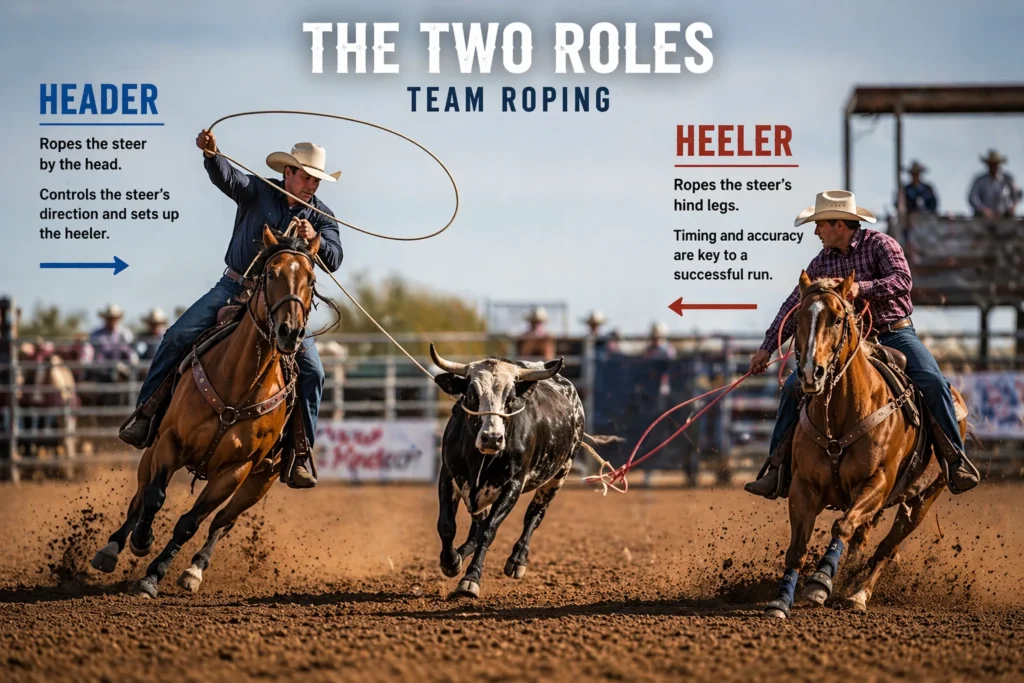
To fully understand how does team roping work, you have to break down the partnership. Each rider has a defined role, and success depends on how well those roles connect.
The Header: Setting the Foundation
The header leads the run. Everything starts here.
Responsibilities include:
- Chasing the steer out of the chute
- Positioning for a clean throw
- Catching the head (horns, neck, or half-head)
- Controlling the steer’s direction
Once the catch is made, the header wraps the rope around the saddle horn this is called “dallying.” Then comes the turn. The horse pivots left, guiding the steer into position for the heeler. A great header doesn’t rush. They create opportunity.
The Heeler: Precision Under Pressure
The heeler’s role is all about timing.
Responsibilities include:
- Tracking the steer’s movement
- Matching speed and distance
- Throwing at the exact right moment
- Catching both hind legs
The challenge? The window is small. Really small. If only one leg is caught, a five-second penalty is added. If both are missed, the run is over. Once the catch is secured, the heeler dallies, and both riders pull their horses back to tighten the ropes. That tension stops the clock. Fast. Clean. Done.
Equipment That Makes It Work
You can’t properly explain how does team roping work without looking at the gear behind it. Every piece plays a role in performance and safety.
Here’s a quick breakdown:
| Equipment | Purpose |
| Rope (Lariat) | Used to catch the steer; different lengths for header and heeler |
| Saddle with Horn | Provides a secure point for dallying |
| Rope Horse | Trained for speed, stopping, and control |
| Protective Gear | Helps prevent injuries to both horse and rider |
Headers typically use shorter ropes for quicker, tighter loops. Heelers use longer ropes to extend their reach. And the horse? It’s not just part of the setup it’s part of the team. A skilled rope horse knows how to stop hard, hold tension, and stay balanced under pressure.
Step-by-Step: How a Team Roping Run Works
Let’s walk through a full run from start to finish.
1. The Steer Breaks the Chute
The steer is released with a slight head start.
2. The Header Pursues
The header accelerates, lining up the shot.
3. The First Throw
The loop is released. A clean head catch sets the tone.
4. The Dally and Turn
The header secures the rope and turns left, positioning the steer.
5. The Heeler Closes In
The heeler tracks the steer’s stride, waiting for the right moment.
6. The Second Throw
The loop targets the hind legs. Timing is everything.
7. The Catch
Two legs = ideal. One leg = penalty. No catch = no time.
8. The Finish
Both riders face each other, ropes tighten, and the clock stops.
That’s exactly how does team roping work plays out in real time fast, coordinated, and unforgiving.
Scoring and Penalties Explained
Team roping is simple to score, but strict in execution.
Winning Rule:
- Fastest clean time wins
Penalties:
- +5 seconds – One hind leg caught
- No time – Broken barrier
- No time – Illegal head catch
- No time – Missed heel catch
Even the smallest error can cost a winning run. Precision isn’t optional it’s required.
Common Mistakes That Cost the Run
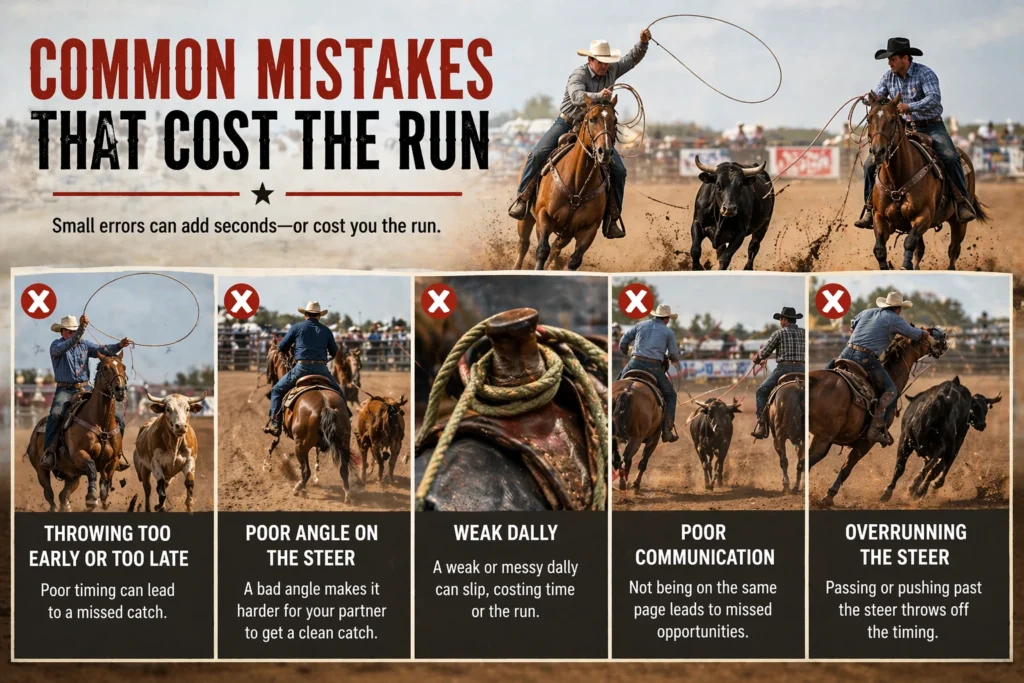
Mistakes happen at every level. The difference is how often and how costly.
Here are common errors:
- Throwing too early or too late
- Poor angle on the steer
- Weak dally leading to rope slip
- Miscommunication between partners
- Overcommitting on speed
The takeaway? Controlled execution beats reckless speed every time.
What Makes a Great Team Roping Pair?
Great teams don’t just practice they sync.
Here’s what separates top performers:
Communication
No words needed. Just awareness.
Consistency
Same rhythm. Same timing. Every run.
Horse Quality
A trained horse improves positioning and response.
Strategy
Reading the steer and adjusting instantly.
Trust
Each rider focuses on their role and trusts the other to deliver. That’s were average turns into elite.
Team Roping in Texas: A Cultural Staple
In Texas, team roping isn’t just a sport it’s identity.
You’ll find it in:
- Local rodeos
- Youth competitions
- Professional circuits
If you’ve ever explored topics like What Events Are in Rodeo, you’ll quickly notice that team roping stands alone as the only true partnership event. That alone makes it essential to the rodeo lineup. It represents real skills, real history, and real connection to ranch life.
How Beginners Can Get Started
Want to try it? Start smart.
Learn the Basics
Practice your swing using a dummy steer.
Choose a Role
Focus on header or heeler first. Don’t rush both.
Find Guidance
A mentor or local club can speed up your learning.
Use the Right Horse
A trained rope horse makes a massive difference.
Stay Safe
Learn proper dally technique and wear protective gear. Progress comes from repetition not rushing.
The Science Behind Timing and Precision
What makes team roping fascinating is how small changes create big outcomes. A slight delay. A minor shift in angle. Everything changes.
It’s similar to concepts studied in Chaos theory, where tiny variations can lead to dramatically different results. That’s why consistency matters so much. Every movement counts.
Why Team Roping Stands Out
There’s nothing quite like it in rodeo.
It’s the only event where:
- Two riders must work in sync
- Timing is shared responsibility
- Success depends on coordination, not just skill
It blends speed, strategy, and teamwork into one high-pressure moment. That’s why people keep asking, how does team roping work because once you understand it, you see how layered it really is.
Advanced Tips to Improve Performance
If you’re serious about improving, focus here:
- Watch your angle – Position matters more than speed
- Stay patient – Don’t rush the throw
- Practice timing drills – Especially for heel shots
- Work with your horse – Build trust and consistency
- Review your runs – Small adjustments make big gains
Improvement isn’t about doing more. It’s about doing better.
Final Thoughts
So, how does team roping work? It works through precision. Through timing. Through trust. It’s two riders moving with purpose, backed by trained horses and years of practice. It’s fast, but never random. Controlled, but never easy. When it all comes together, it’s one of the most impressive sights in rodeo. Watch closely. Study the details. And if you ever get the chance try it yourself. That’s where the real understanding begins.
FAQs
How does team roping work in simple terms?
Team roping involves two riders working together one ropes the steer’s head, the other ropes the hind legs to stop the clock as fast as possible.
What is the role of the header in team roping?
The header ropes the steer’s head and controls its direction to set up the heeler for a clean shot.
What does the heeler do in team roping?
The heeler ropes the steer’s hind legs, ideally catching both legs to avoid penalties and complete the run.
What happens if only one hind leg is caught?
A five-second penalty is added to the team’s final time.
What is a “no time” in team roping?
A no time occurs when a rule is broken, such as missing a catch or making an illegal head catch.
Why is timing important in team roping?
Precise timing ensures both riders coordinate perfectly, which is essential for a fast and clean run.
What kind of horse is used in team roping?
Specially trained rope horses are used for their speed, stopping ability, and responsiveness.
Is team roping the only team event in rodeo?
Yes, it’s the only rodeo event where two riders compete together as a team.
Can beginners learn team roping easily?
Yes, but it requires consistent practice, proper guidance, and a focus on mastering one role at a time.
Where is team roping most popular?
Team roping is especially popular in Texas, where it’s deeply connected to ranching and rodeo traditions.