Rodeo didn’t start in a boardroom. It started in dust, sweat, and long days on horseback. But the origin of the PRCA the Professional Rodeo Cowboys Association marks the moment when raw competition evolved into a structured, respected sport. That shift didn’t happen overnight. It was driven by frustration, unity, and a demand for fairness. And it changed everything. Let’s break it down. Not just what happened but why it mattered, and how it still shapes every rodeo you see today.
The Early Days of Rodeo (Before Structure Existed)
Before the origin of the PRCA, rodeo was loose. Unregulated. Sometimes chaotic. Cowboys competed because they could not because there was a formal system. Skills like roping, riding, and wrestling weren’t invented for sport. They came straight from ranch work. If you could ride a bronc or rope a steer faster than the next guy, you earned respect. Maybe even a small prize. But consistency? Not even close. Events varied wildly from one town to the next. Prize money wasn’t guaranteed. Judging? Often subjective, sometimes biased. Still, the crowds loved it. Rodeo began popping up at fairs, festivals, and community gatherings across the American West. What started as friendly competition quickly became a spectacle. Promoters saw opportunity. Cowboys saw risk. Because here’s the truth without structure, someone always loses more than they should.
The Breaking Point: Why Cowboys Demanded Change
The origin of the PRCA didn’t come from comfort. It came from pressure. Cowboys were tired. Not of competing but of being taken advantage of.
Here’s what they were dealing with:
- Prize money that changed without warning
- Unsafe conditions for both riders and animals
- No consistent rules across events
- Promoters holding too much power
Imagine showing up, risking injury, and walking away with less than promised. It happened. A lot. So, cowboys started talking. Quietly at first. Then louder. They realized something simple but powerful: individually, they had no leverage. Together, they did. That realization set the stage for everything that followed.
1936: The Cowboy Turtle Association Is Born
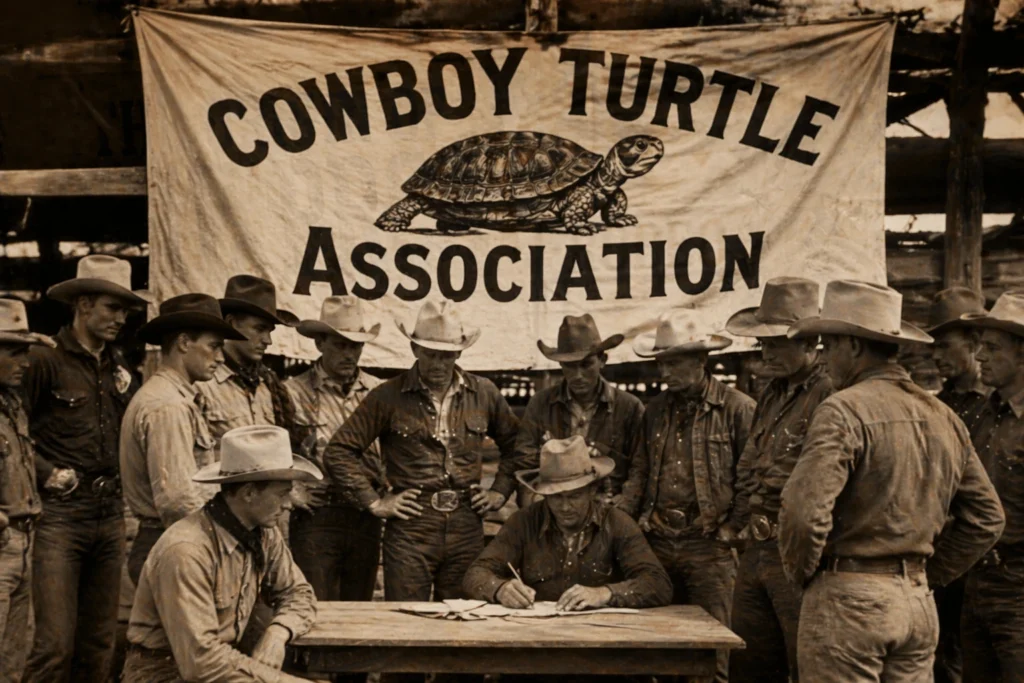
The true origin of the PRCA begins in 1936. And it starts with a protest. At a rodeo in Boston Garden, cowboys took a stand. They refused to compete unless their demands for fair treatment were addressed. It was bold. Risky. Necessary. Out of that moment came the Cowboy Turtle Association (CTA). Strange name, right? Not really. The “turtle” symbolized slow but steady progress. No shortcuts. No flash. Just forward movement together.
What the CTA Fought For
The CTA wasn’t trying to control rodeo. It was trying to fix it.
Their early goals were clear:
- Fair and guaranteed prize money
- Standardized competition rules
- Safer conditions for participants
- Representation for cowboys
And here’s the key they made promoters listen. That’s the first real turning point in the origin of the PRCA.
From CTA to RCA: Growth and Professionalism
The CTA worked. But as rodeo grew, so did the need for something bigger. So, the organization evolved. It became the Rodeo Cowboys Association (RCA). This wasn’t just a name change. It was a shift in identity. Rodeo was no longer just a tradition it was becoming a profession.
What Changed During the RCA Era?
A lot.
- Formal rulebooks were introduced
- Membership expanded across states
- Rodeo circuits became organized
- Competitors gained more visibility and credibility
For the first time, rodeo had a backbone. And with that backbone came trust from competitors, fans, and sponsors alike.
The origin of the PRCA was taking shape, piece by piece.
1975: The Birth of the PRCA
Now we get to the moment that defines it all. In 1975, the RCA officially became the Professional Rodeo Cowboys Association (PRCA). Why the change? Because rodeo had outgrown its past identity. The new name reflected a modern, professional sport one that could stand alongside other major athletic organizations.
What the PRCA Brought to the Table
This wasn’t cosmetic. It was structural.
The PRCA introduced:
- Clear governance and leadership
- Standardized event formats
- Consistent judging systems
- Nationwide sanctioning of rodeos
In short, it created order. And that order is why the origin of the PRCA still matters today.
How the PRCA Standardized Rodeo
Let’s get practical. What does “standardization” actually mean in rodeo? It means that whether you’re in Texas, Wyoming, or Nevada the rules are the same. That’s huge.
Core Events Defined by the PRCA
The PRCA established consistency across major rodeo events:
- Bareback Riding
- Saddle Bronc Riding
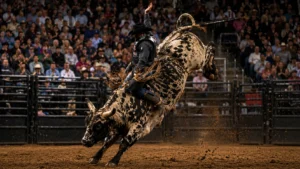
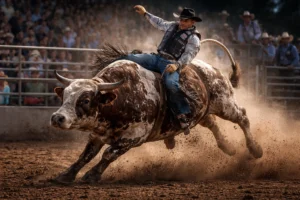
- Bull Riding
- Steer Wrestling
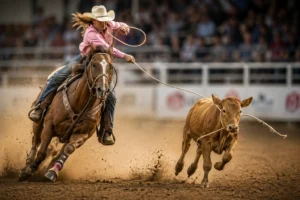
- Team Roping
- Tie-Down Roping
- Barrel Racing (through partnerships and affiliated organizations)
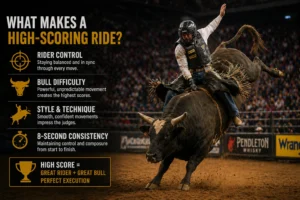
Each event follows strict scoring criteria. No guesswork.
Scoring Example
| Event | Judging Criteria |
| Bull Riding | Rider skill + bull performance |
| Bareback Riding | Control, spurring technique |
| Roping Events | Time-based precision |
This structure didn’t just improve fairness it made the sport watchable, understandable, and scalable. Another major step in the origin of the PRCA.
Safety: From Afterthought to Priority
Let’s be honest rodeo is dangerous. Always has been. But before the PRCA, safety wasn’t standardized.
That changed.
PRCA Safety Improvements
- Required protective gear standards
- Veterinary oversight for livestock
- Arena condition regulations
- Emergency response protocols
These aren’t small upgrades. They’re foundational. They protect careers. Lives, even. And they reinforce the professionalism tied to the origin of the PRCA.
The Rise of the National Finals Rodeo
If the PRCA is the engine, the National Finals Rodeo is the spotlight. This event became the championship stage for the best in the sport. Top competitors qualify. The stakes are high. The audience is global.
Why the NFR Matters
- It defines season champions
- It attracts major sponsorships
- It elevates rodeo into mainstream visibility
Without the PRCA, the NFR doesn’t exist as we know it. And without the NFR, rodeo lacks its biggest stage.
Preserving Tradition While Moving Forward
Here’s the balance the PRCA had to strike and still does. Modernize the sport without losing its roots. Not easy. But necessary. Interestingly, this kind of balance between tradition and innovation mirrors the concept of Pareto efficiency a state where improvements can’t be made without compromising something else. Rodeo had to evolve without losing its identity, and the PRCA managed that tension carefully.
How the PRCA Protects Rodeo Culture
- Upholding traditional event formats
- Supporting youth rodeo programs
- Promoting cowboy heritage
This isn’t just about competition. It’s about identity. The origin of the PRCA wasn’t meant to replace tradition it was meant to protect it.
The Legacy of Cowboys Who Shaped the Sport
As the PRCA grew, it also created a platform where talent could shine consistently across events and regions. This structure helped elevate Famous Texas rodeo cowboys and other top competitors into recognizable figures within the sport.
Before organization, even the most skilled riders could go unnoticed outside their local circuits. But with PRCA sanctioning, rankings, and national exposure, elite cowboys gained the recognition they deserved. Their success stories didn’t just inspire fans they validated the importance of structure, fairness, and opportunity within rodeo. This is another powerful layer in the origin of the PRCA it didn’t just protect cowboys. It amplified them.
Challenges the PRCA Has Faced
No organization grows without resistance. The PRCA has had its share.
Key Challenges
- Animal welfare concerns
- Public perception issues
- Competition from other rodeo organizations
These challenges forced adaptation. Stricter rules. Better transparency. Stronger communication. And that’s a good thing. Because evolution is part of survival.
PRCA Today: A Modern Rodeo Powerhouse
Fast forward to today. The PRCA isn’t just relevant it’s dominant.
What It Looks Like Now
- Thousands of members across multiple categories
- Hundreds of sanctioned rodeos annually
- National and international reach
It operates like a professional sports league. Because it is one. And it all traces back to the origin of the PRCA a moment when cowboys decided enough was enough.
Why the Origin of the PRCA Still Matters
Let’s bring it home. The origin of the PRCA isn’t just history. It’s a blueprint. It shows what happens when competitors demand fairness and organize to achieve it.
It’s why:
- Prize money is reliable
- Rules are consistent
- Athletes are protected
- Fans trust the sport
Without that origin, rodeo stays fragmented. With it, rodeo thrives.
Key Takeaways (Quick Reference)
- The origin of the PRCA began with a 1936 protest
- It evolved from CTA → RCA → PRCA
- Standardization transformed rodeo into a professional sport
- Safety and fairness became non-negotiable
- The PRCA continues to shape rodeo globally
Final Thoughts
I’ll say it plainly the origin of the PRCA changed rodeo forever. It turned scattered competitions into a unified sport. It gave cowboys a voice. It gave fans something they could trust. And it proved something bigger. When people come together with purpose, even a sport born in the dirt can rise to global recognition. That’s not just history. That’s legacy.
FAQs
What is the PRCA?
The Professional Rodeo Cowboys Association is the largest governing body for professional rodeo in the United States, setting rules and standards for events.
When did the origin of the PRCA begin?
The origin of the PRCA traces back to 1936 with the formation of the Cowboy Turtle Association after a major protest for fair treatment.
Why was the PRCA created?
It was created to ensure fair pay, consistent rules, and safer conditions for rodeo competitors.
What was the Cowboy Turtle Association?
It was the original organization formed by cowboys in 1936 to advocate for fairness, which later evolved into the PRCA.
How did the PRCA change rodeo?
It standardized events, improved safety, and created a professional structure that made rodeo more credible and competitive.
What is the National Finals Rodeo?
The National Finals Rodeo is the PRCA’s championship event where top competitors compete for season titles.
Why is the origin of the PRCA important today?
It established the rules, fairness, and professionalism that modern rodeo depends on.
How does the PRCA support rodeo athletes?
It provides structured competitions, enforces fair payouts, and ensures safer working conditions.
Did the PRCA help popularize rodeo?
Yes, by organizing events and promoting top competitors, it helped bring rodeo to a wider national audience.
Is the PRCA still active today?
Yes, it remains the leading rodeo organization, sanctioning hundreds of events each year.