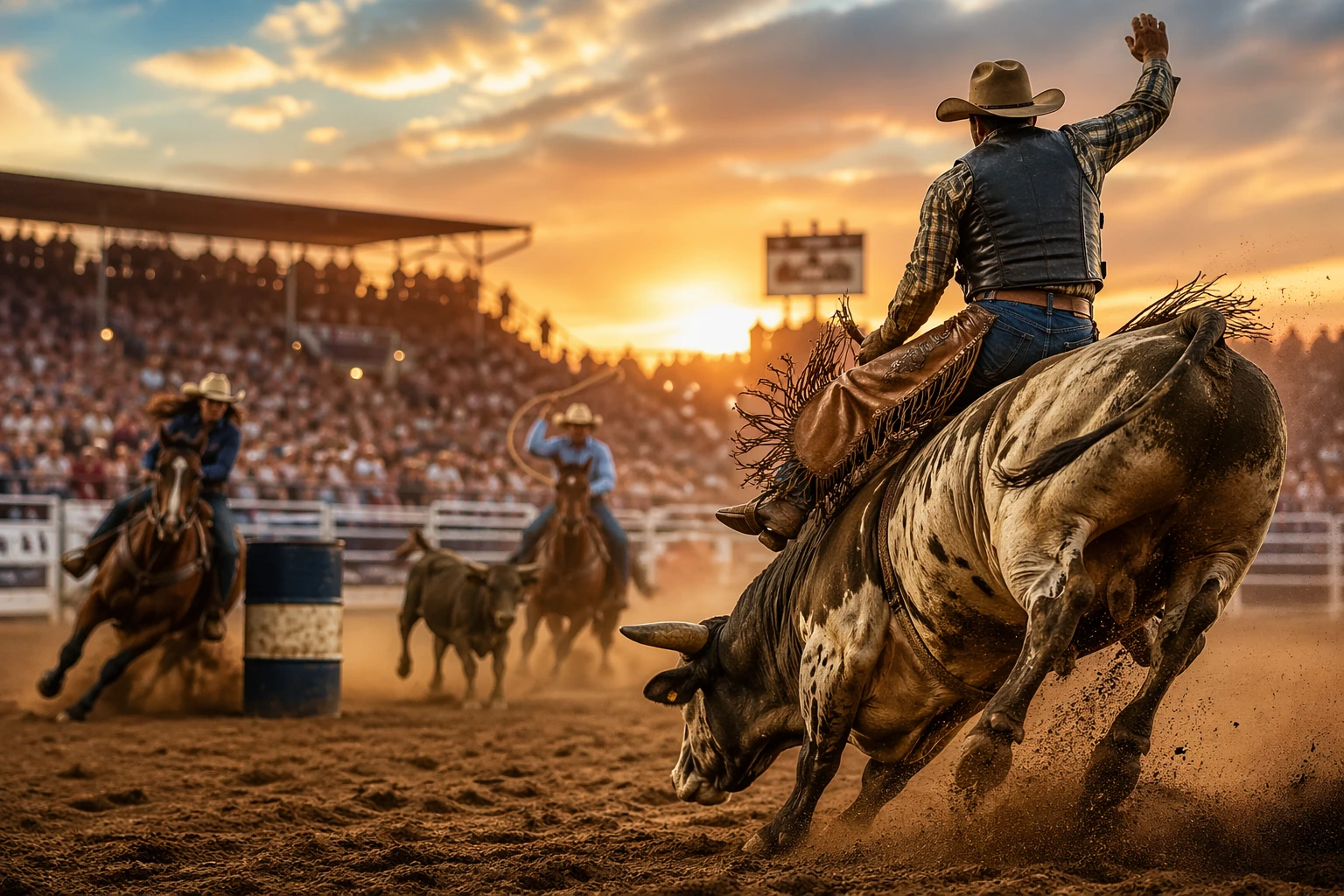
Step into the arena and everything changes. The air feels heavier. The crowd leans forward. And if you’ve ever wondered what happens at a rodeo, you’re about to get the full picture start to finish, no fluff, just the real experience. This isn’t just a sporting event. It’s tradition, adrenaline, skill, and culture packed into a few intense hours. Whether you’re attending your first rodeo or just curious, this guide breaks down exactly what happens at a rodeo from the moment the gates open to the final ride.
The Atmosphere Before the Action Begins
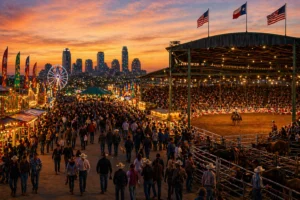
You don’t just “arrive” at a rodeo. You step into it. Before the first event even starts, the environment is already alive. Music plays. Vendors line the pathways. The smell of barbecue hangs in the air. Families, seasoned fans, and first-timers all mix together.
Here’s what you’ll notice right away:
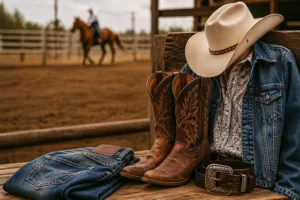
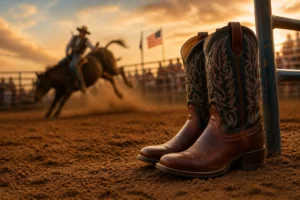
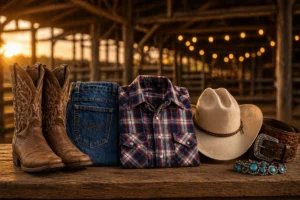
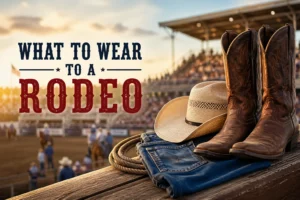
- Western attire everywhere: Cowboy hats, boots, denim it’s not a costume here, it’s culture
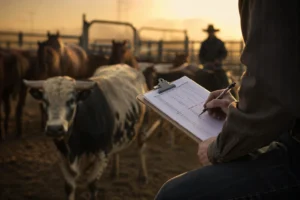
- Livestock staging areas: Horses, bulls, and calves being prepped behind the scenes
- Contestants warming up: Focused, quiet, locked in
- Food and merchandise booths: Brisket sandwiches, funnel cakes, leather goods
Arrive early. Seriously. You’ll miss half the experience if you don’t. Because understanding what happens at a rodeo starts before the first ride even begins.
Opening Ceremonies and Traditions

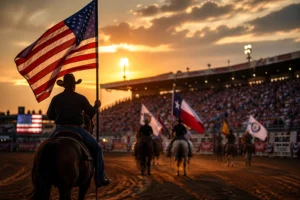
The rodeo doesn’t ease in. It launches. The opening ceremony sets the tone fast loud, proud, and precise.
You’ll typically see:
- A grand entry where riders circle the arena carrying flags
- The national anthem, often performed live
- A formal introduction of contestants and announcers
- A high-energy kickoff that gets the crowd engaged instantly
It’s not just a formality. It’s a signal. The competition is about to begin.
Understanding Rodeo Competition Structure
To really grasp what happens at a rodeo, you need to understand how events are structured. It’s not random. It’s carefully organized.
Rodeo events fall into two main categories:
| Category | Description | Objective |
| Roughstock | Riders compete on bucking animals | Score based on performance |
| Timed Events | Speed-based competitions | Fastest time wins |
Judges score roughstock events. Timers track timed events down to fractions of a second. Simple structure. High stakes.
Roughstock Events Where the Arena Explodes
This is where things get loud. Fast. Roughstock events are about control under chaos. Riders must stay mounted for 8 seconds which sounds short until you see it happen.
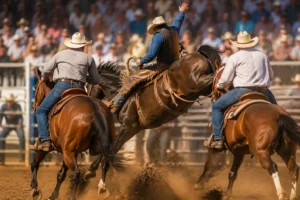
Bareback Riding
No saddle. Just a rigging handle. The rider grips tightly while the horse bucks violently beneath them. Judges score both the rider’s technique and the horse’s performance. It’s raw. It’s intense.
Saddle Bronc Riding
More rhythm. More finesse. This event has deep roots in ranch work. Riders must match the horse’s movements with controlled, fluid motion. It looks almost graceful until it doesn’t.
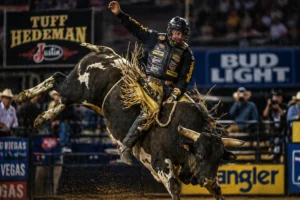
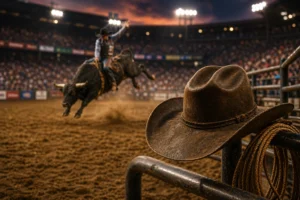
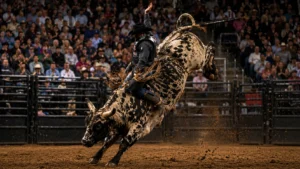
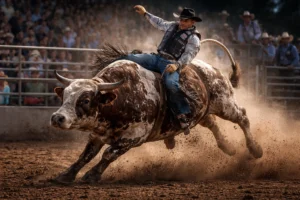
Bull Riding
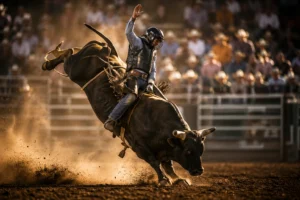
This is the headline act. Always. A 2,000-pound bull. One rider. Eight seconds that feel like forever. If you’re asking what happens at a rodeo, this is the moment people come for. The crowd goes silent… then explodes. And when things go wrong? That’s where bullfighters often called rodeo clowns step in. They protect the rider. Fast decisions. Real risk.
Timed Events Precision Under Pressure
Not everything is chaos. Some events are about speed, control, and exact timing. Blink and you’ll miss it.
Barrel Racing
A cloverleaf pattern around three barrels. Riders push for speed, but control is everything. Knock a barrel? Add a penalty. It’s tight. It’s fast. It’s unforgiving.
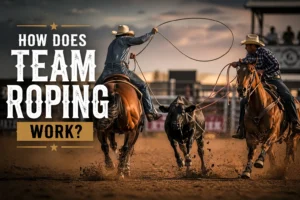
Team Roping
Two riders. One goal.
- The header ropes the steer’s horns
- The heeler ropes the hind legs
Perfect coordination wins. Anything less? Lost seconds.
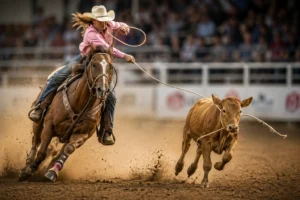
Tie-Down Roping
Speed meets technique. A rider ropes a calf, dismounts, and ties three legs together. It’s rooted in real ranch work quick, efficient livestock handling.
Steer Wrestling
This one gets your attention. A cowboy leaps off a horse, grabs a running steer, and wrestles it to the ground. Strength matters. Timing matters more.
Breakaway Roping
Fastest event in the arena. The rope snaps free when the calf is caught, stopping the clock instantly. No delay. No hesitation.
Specialty Acts and Crowd Entertainment
Between events, the energy doesn’t drop. It shifts.
You’ll see:
- Rodeo clowns delivering humor and protection
- Trick riders performing stunts on horseback
- Mutton bustin’ where kids ride sheep
These moments aren’t filler. They keep the crowd engaged and the rhythm steady. Because part of understanding what happens at a rodeo is recognizing that entertainment never stops.
The Role of Animals in Rodeo
Let’s address it directly.
Animals are central to rodeo. And they’re not random participants they’re trained athletes.
Here’s what matters:
- Livestock are bred specifically for rodeo performance
- Strict rules exist to ensure animal welfare and safety
- Veterinarians and staff are present at events
- Top animals are as valuable and respected as top riders
There are misconceptions. But the reality is structured, regulated, and focused on care.
The Flow of a Typical Rodeo
Rodeos move fast. There’s no long downtime.
Events are strategically mixed:
- Roughstock event
- Timed event
- Entertainment break
- Repeat
This keeps the pacing tight and the audience engaged.
Here’s a simplified sequence:
- Opening ceremony
- Bareback riding
- Timed event
- Saddle bronc riding
- Timed event
- Bull riding finale
Most rodeos last about 2 to 3 hours. And it flies by.
Scoring, Winners, and Prize Money
Now let’s talk results.
Roughstock Scoring
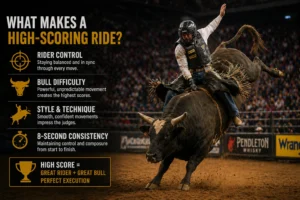
- Total score out of 100
- 50 points for rider
- 50 points for animal
The better the animal performs, the higher the potential score. It’s a partnership even if it looks like a battle.
Timed Events
- Fastest time wins
- Penalties added for mistakes
Prize Money
Competitors aren’t just here for fun.
- Winners earn cash payouts
- Points contribute to season rankings
- Top performers qualify for major finals
Here’s a quick snapshot:
| Outcome Type | Result |
| High score ride | Larger payout + ranking points |
| Fastest time | Event winner |
| Penalties applied | Time added / lower ranking |
This is professional-level competition.
The Culture and Community Behind Rodeo
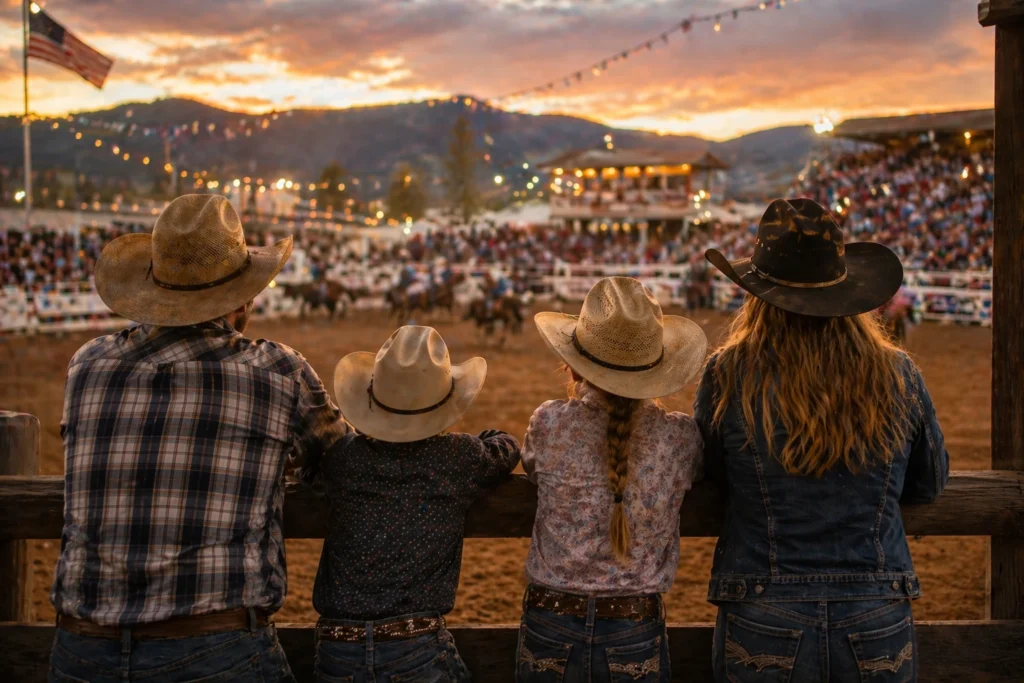
This is bigger than sport.
Rodeo is built on history deep roots in ranching and agricultural life. Many competitors grew up in it. Families pass it down.
You’ll see:
- Generations attending together
- Local communities supporting events
- A strong sense of identity and pride
Even the organization and movement of riders and livestock in the arena can be described using principles similar to kinematics timing, speed, and positioning all working together in real time.
Behind-the-Scenes Roles That Keep It Safe
There’s more happening than what you see in the spotlight.
One role that often goes unnoticed but is critical is the pickup man. If you’ve ever asked yourself what is a pickup man in rodeo, it’s the skilled rider who assists competitors after their ride ends, helping them safely dismount from bucking horses and quickly exit the arena.
They’re fast. Precise. And essential to rider safety.
But that’s not the only behind-the-scenes role. There are also:
- Gate operators controlling animal release timing
- Judges tracking every movement
- Arena crews maintaining ground conditions between events
- Medical teams ready to respond instantly
Without these roles, the entire system breaks.
What First-Time Attendees Should Expect
Let’s make this practical. If you’re planning to attend, here’s how to get the most out of it:
Quick Tips
- Arrive early for the full experience
- Dress comfortably (boots help, but aren’t required)
- Bring ear protection if you’re sensitive to noise
- Watch the announcer cues to follow the action
- Stay engaged events move quickly
What Surprises People
- How fast events happen
- How loud the crowd gets
- How skilled the animals are
- How immersive the experience feels
Knowing what happens at a rodeo ahead of time changes everything. You’ll follow it better. You’ll enjoy it more.
Common Mistakes First-Time Rodeo Fans Make
Let’s save you from a few rookie errors.
- Arriving late and missing the opening ceremony
- Not understanding scoring, leading to confusion
- Focusing only on bull riding and missing other events
- Sitting too far away without realizing how fast action happens
- Ignoring the announcer, who explains everything in real time
Fix these, and your experience improves instantly.
Why Rodeos Remain Popular Today
You might expect something this traditional to fade. It hasn’t. In fact, rodeo is still growing.
Why?
- It combines sport, culture, and entertainment
- It offers a live experience you can’t replicate
- It connects modern audiences to a real, physical skillset
- Organizations like the Professional Rodeo Cowboys Association keep standards high and competition strong
There’s nothing passive about it. You feel every second.
Final Thoughts: The Full Experience
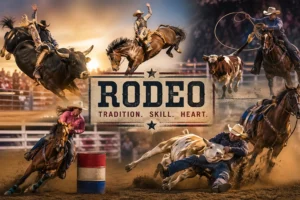
So, what happens at a rodeo? Everything. You get speed. Power. Precision. Tradition. Risk. Skill. Community. You get a full sensory experience that doesn’t slow down, doesn’t fake it, and doesn’t apologize for being intense. And once you’ve seen it live, it clicks. Understanding what happens at a rodeo on paper is one thing. Experiencing it? That’s something else entirely. if you haven’t been yet go. You’ll get it.
FAQs
What happens at a rodeo for beginners?
A rodeo features a mix of riding and timed events, opening ceremonies, and live entertainment, all packed into a fast-paced experience.
How long does a typical rodeo last?
Most rodeos run between 2 to 3 hours, depending on the number of events and performances.
What are the main events in a rodeo?
The main events include bull riding, saddle bronc riding, bareback riding, barrel racing, team roping, and steer wrestling.
Is rodeo dangerous for participants?
Yes, it carries risk, but strict safety measures, trained staff, and protective roles like bullfighters help reduce danger.
What should I wear to a rodeo?
Comfortable clothing works best, but many people wear jeans, boots, and cowboy hats to match the atmosphere.
Are rodeos family-friendly?
Yes, most rodeos include family-friendly activities like mutton bustin’ and entertainment between events.
Do animals get hurt in rodeos?
Rodeos follow strict regulations to protect animals, and veterinarians are present to ensure their health and safety.
What is the most popular rodeo event?
Bull riding is widely considered the most popular due to its intensity and high risk.
How are winners decided in rodeo events?
Roughstock events are judged on performance, while timed events are won by the fastest time.
Do I need to understand rodeo rules to enjoy it?
Not really the announcer explains each event, making it easy for first-time attendees to follow along.