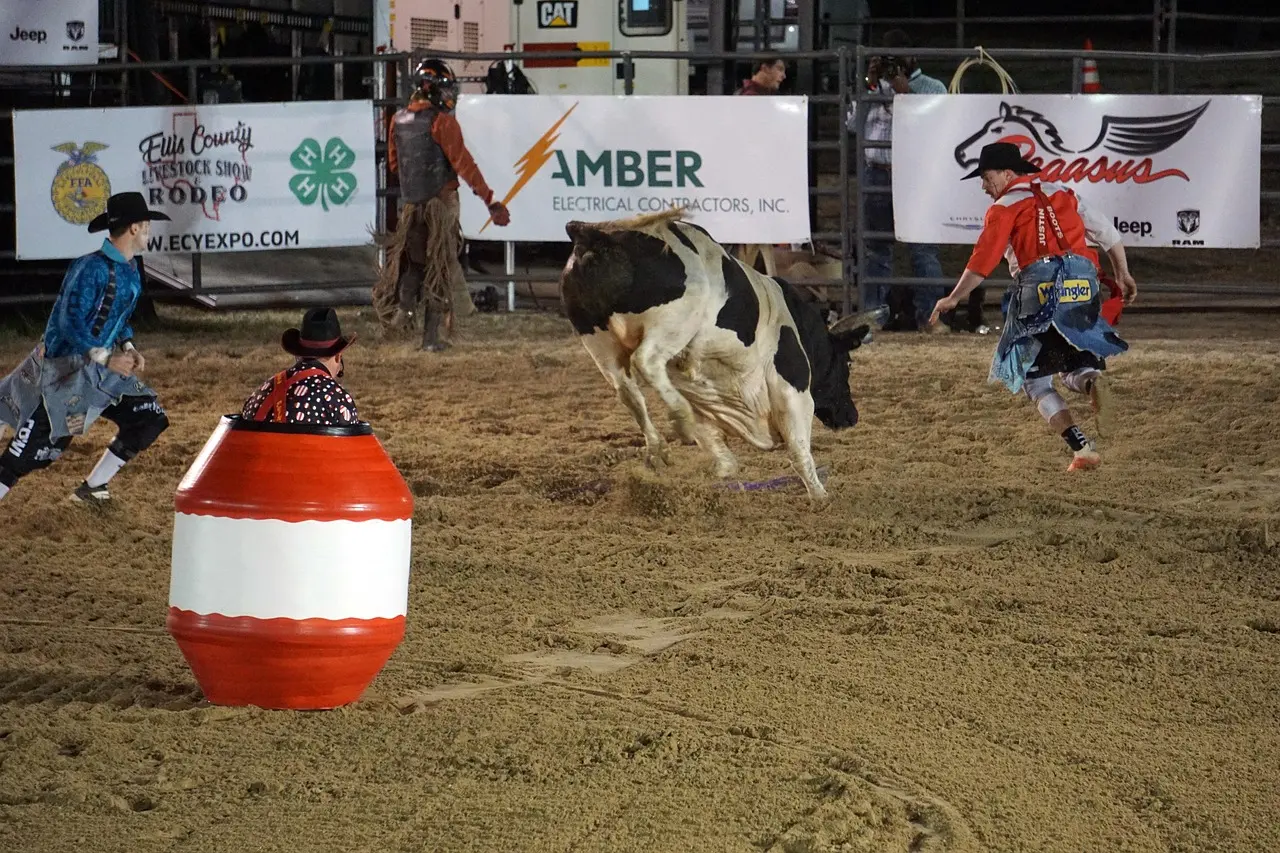
A rodeo clown is the person in the arena whose job is to keep bull riders alive and keep the crowd laughing at the same time. If you have ever watched a cowboy get thrown and seen someone in bright, baggy clothes sprint straight at a 1,800-pound bull, you have seen one at work. It looks like comedy. It is actually one of the most dangerous jobs in rodeo.
This guide explains what rodeo clowns do, how the role split into bullfighters, barrelmen and entertainers, where the job came from, the famous names worth knowing, and what to watch for the next time you are in the stands at a Texas rodeo.
What Is a Rodeo Clown?
A rodeo clown is a performer who works the bull riding event. The role has always had two halves:
- Protection: when a rider comes off, the clown distracts the bull and gives it a different target so the cowboy can get to his feet and out of the arena.
- Entertainment: between rides and during delays, the clown keeps the crowd engaged with jokes, skits and back-and-forth with the announcer.
For most of rodeo history one person did both. Today, at larger events, those jobs belong to different people, and the protection specialists prefer to be called bullfighters. Many modern rodeo programs also use the term "rodeo protection athlete." When people search for "rodeo clown," they usually mean all of these roles, so this guide covers each one.
Rodeo Clown vs. Bullfighter vs. Barrelman
Here is how the work is divided at a professional rodeo or bull riding event.
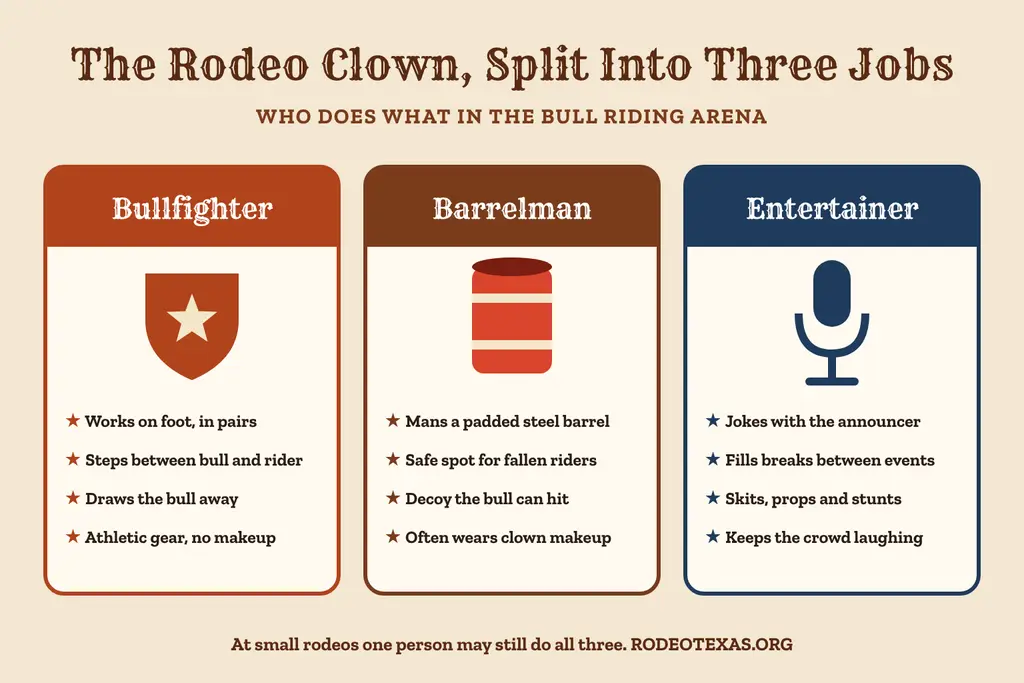
| Role | Main job | Where you will see them | Look |
|---|---|---|---|
| Bullfighter | Gets between the bull and a fallen rider, turns the bull away | On foot near the chute, usually in pairs or a team of three | Athletic jersey and shorts, protective vest, no makeup |
| Barrelman | Mans a padded barrel the bull can hit and a rider can dive behind | Stationed in the arena during bull riding | Often the classic clown face paint and baggy outfit |
| Entertainer | Comedy, crowd work, skits and banter with the announcer | All over the arena between events | Bright costumes, props and a wireless microphone |
At a small-town or youth rodeo, one person may still cover all three. At a big show, you may see two to four bullfighters on bull riding duty, plus a separate barrelman or entertainer.
Bullfighters: the protection specialists
Bullfighters enter the arena on foot before the gate opens and set up on either side of the bucking chute. They work as a team. When a rider is thrown, hung up in his rope, or knocked down, they move in, step between the rider and the bull, and run at angles that pull the bull's attention toward them instead. A shout, a slap on the bull's head or a well-timed sprint can buy a cowboy the two seconds he needs to escape.
The job takes speed, conditioning and an almost instinctive read on how a bull will move next. Good bullfighters study the bucking patterns of individual animals the same way riders do. That is one reason the way rodeo stock is selected matters to everyone in the arena, not just the cowboy on its back.
Barrelmen: the clown in the can
The barrel is a padded steel drum, painted bright colors, that sits in the arena during bull riding. It serves as a shield, a decoy the bull can hit instead of a person, and a safe spot a rider can duck behind. The barrelman often climbs inside it, which is why the role is sometimes called the "clown in the can." He also handles a lot of the comedy, trading jokes with the announcer and teasing the crowd.
Entertainers: keeping the show moving
Rodeos have natural pauses: resetting chutes, dragging the arena, waiting on scores. The entertainer fills that time with skits, music, props and crowd games so the energy never drops. At big bull riding events, this person is a headline act in their own right.
What Does a Rodeo Clown Actually Do During a Ride?
Watch the bullfighters instead of the rider on your next bull riding section and you will see a routine:
- Before the gate opens: bullfighters take positions near the chute, one on each side, reading the bull as it settles.
- During the ride: they shadow the bull at a distance, staying close enough to react but out of the way of the ride and the judges' view.
- At the dismount or wreck: the moment the rider is off, one bullfighter steps in to draw the bull while another checks on the cowboy. If the rider is hung up in his rope, they work to free his hand.
- Exit: they keep the bull busy until the rider is clear, then guide the bull toward the out gate, often with help from the pickup men on horseback.
All of that happens in a few seconds, which is why the best bullfighters often go unnoticed by casual fans. If the rider walks away and the crowd never gasps, the bullfighters did their job.
A Short History of the Rodeo Clown
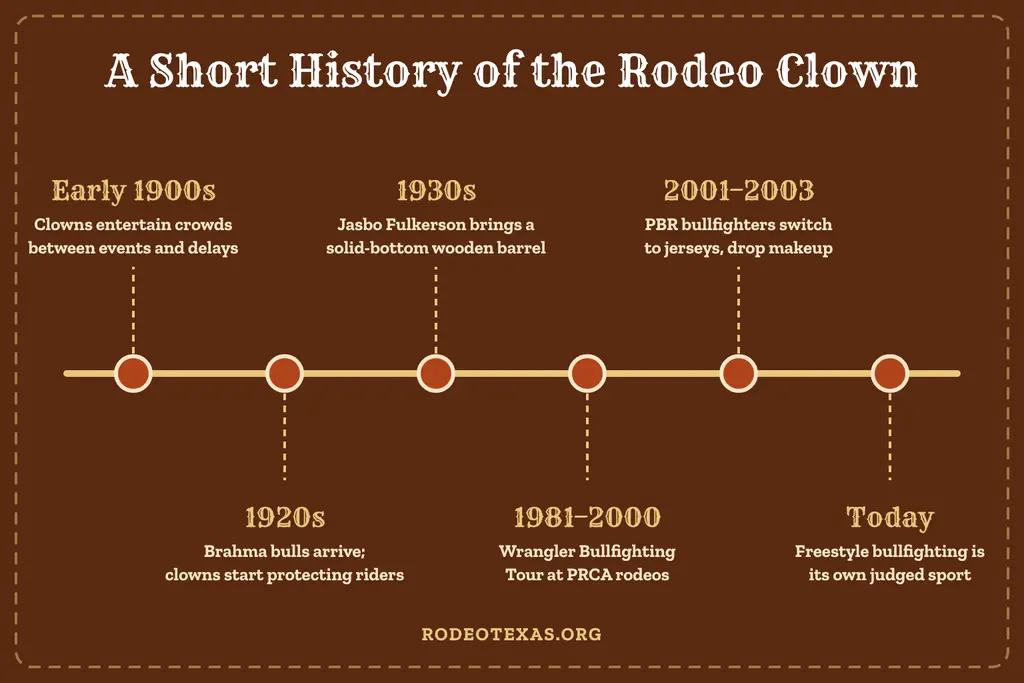
Rodeo clowns are as old as competitive rodeo. In the early 1900s, promoters hired cowboys to entertain the crowd between events and during delays. The job changed in the 1920s, when rodeos began bucking Brahma-cross bulls that were bigger, faster and far more willing to go after a fallen rider. Distracting the bull became part of the clown's work, and it quickly became the most important part.
In the 1930s, clown Jasbo Fulkerson began using a wooden barrel with a solid bottom for protection, an idea that became a rodeo staple. From 1981 through 2000, the Wrangler Bullfighting Tour ran at rodeos sanctioned by the Professional Rodeo Cowboys Association (PRCA), and its top bullfighters competed at the National Finals Rodeo. If you want the bigger picture of how professional rodeo was organized, our guide to the origin of the PRCA covers it.
The look changed next. At the 2001 PBR World Finals, bullfighter Rob Smets wore a sports jersey and shorts instead of a baggy clown outfit, and by 2003 every bullfighter with the Professional Bull Riders (PBR) had dropped the makeup. The barrelmen and entertainers kept the paint, which is why you still see both looks today. You can read more of this history on Wikipedia's rodeo clown entry.
Texas has always been a center of rodeo clowning. Texas Highways profiled several of the state's clowns and bullfighters in "Inside the Ring With Rodeo Clowns." For more on how rodeo grew up here, see our history of rodeo in Texas.
Why Do Rodeo Clowns Wear Baggy Clothes and Makeup?
The classic outfit is practical as well as funny:
- Bright colors catch the bull's attention and make the clown easy for riders and fans to spot.
- Loose, tear-away clothing is designed to rip if a horn catches it, instead of dragging the wearer along. Protective padding goes underneath.
- Face paint is part of the comedy tradition and makes the performer recognizable from the top row of the stands.
Modern bullfighters have mostly traded the baggy look for fitted athletic gear and padded vests, but the barrelman's costume and paint remain a beloved part of the show.
Is Being a Rodeo Clown Dangerous?
Yes. Rodeo clowns and bullfighters work up close with animals that weigh close to a ton and can turn faster than any person can run. Serious injuries are part of the job, and the sport has lost bullfighters over the years. Most rely on protective vests, conditioning and teamwork to cut the risk, and many train at bullfighting schools before they work professional events. It is the same reason riders take proper bull riding training seriously before they ever climb into a chute.
Freestyle Bullfighting: When the Bullfighter Is the Star
Freestyle bullfighting turns the protection skills into a judged event. There is no rider to protect. Instead, a bullfighter faces a fighting bull for roughly 60 to 70 seconds and earns points for control, close passes, jumps over the bull and handling of the barrel. The bull is not harmed. Organizations such as Bullfighters Only host these events, and they have built a following of their own.
Famous Rodeo Clowns and Bullfighters
- Jasbo Fulkerson: the 1930s clown credited with bringing the solid-bottom barrel into the arena.
- Slim Pickens: spent close to 20 years in rodeo, including as a well-known rodeo clown, before his film career began with Rocky Mountain in 1950. He was inducted into the ProRodeo Hall of Fame in 2005 for his clown work.
- Rob Smets: the bullfighter whose jersey-and-shorts look at the 2001 PBR World Finals became the standard for PBR bullfighters.
- Frank Newsom: the last bullfighter to work a televised PBR event in a baggy outfit and makeup (2004), who went on to a long career as an elite PBR bullfighter until 2022.
- Flint Rasmussen: the PBR's longtime arena entertainer and eight-time PRCA Clown of the Year (1998 to 2005). Raised in Montana, he now lives in Fort Worth, Texas.
For more legends of the Lone Star arena, read our list of famous Texas rodeo cowboys.
How Much Do Rodeo Clowns Make?
There is no official pay scale. Most rodeo clowns and bullfighters work as independent contractors and are hired by individual rodeo committees or tours, often paid per performance or per event. Pay depends heavily on the level of the rodeo. Local and youth rodeos pay modestly, while the most in-demand bullfighters and entertainers at major PRCA rodeos and PBR events can earn a full-time living. Many also earn from sponsorships, appearances and comedy acts outside rodeo season.
How to Become a Rodeo Clown or Bullfighter
- Learn the sport first. Most clowns and bullfighters grew up around rodeo, often as riders. Understanding how a rodeo works and the order of events is the foundation.
- Get in shape. Bullfighting is closer to a sprint sport than a comedy gig. Agility, footwork and stamina matter most.
- Attend a bullfighting or rodeo clown school. Several schools teach positioning, reading bulls and safety techniques.
- Start small. Junior, high school and amateur rodeos are where most bullfighters and entertainers earn their first jobs and their reputation.
- Join an association. Working PRCA-sanctioned rodeos requires a membership card, and the best performers are invited back year after year.
See Rodeo Clowns and Bullfighters in Texas
The best way to appreciate what rodeo clowns do is to watch them live. Bull riding is usually the last event of the night, so stay until the end. Browse upcoming bull riding events in Texas, check rodeos happening this weekend, or search the full Texas rodeo schedule by city or ZIP code. If it is your first time, our guide on what to wear to a rodeo will help you fit right in.
Rodeo Clown FAQs
Are rodeo clowns still used today?
Yes. Many rodeos still have a clown or barrelman who handles comedy, while bullfighters handle rider protection. At smaller rodeos one person may still do both jobs.
What is the difference between a rodeo clown and a bullfighter?
A bullfighter's only job is protecting riders from the bull. A rodeo clown traditionally combined protection with comedy. Today the term "rodeo clown" is often used for the barrelman or entertainer.
Why do rodeo clowns use a barrel?
The padded barrel gives the bull something other than a person to hit, gives riders a safe spot to duck behind, and gives the barrelman a protected place in the arena.
Who was the most famous rodeo clown?
It depends on the era. Slim Pickens is the best-known name outside rodeo, while Flint Rasmussen is widely regarded as the most famous barrelman in modern bull riding.
Do rodeo clowns work every event?
Bullfighters work the bull riding. Entertainers and barrelmen may perform throughout the rodeo, filling breaks between events.